iCoffee
Design Principle
When every detail is clear, time stays on your side.
METADATA
Role
Product Designer
Project Type
Concept Project
Platform
Mobile Application
Scope
End-to-End Product Design
Tools
Figma
Project Introduction
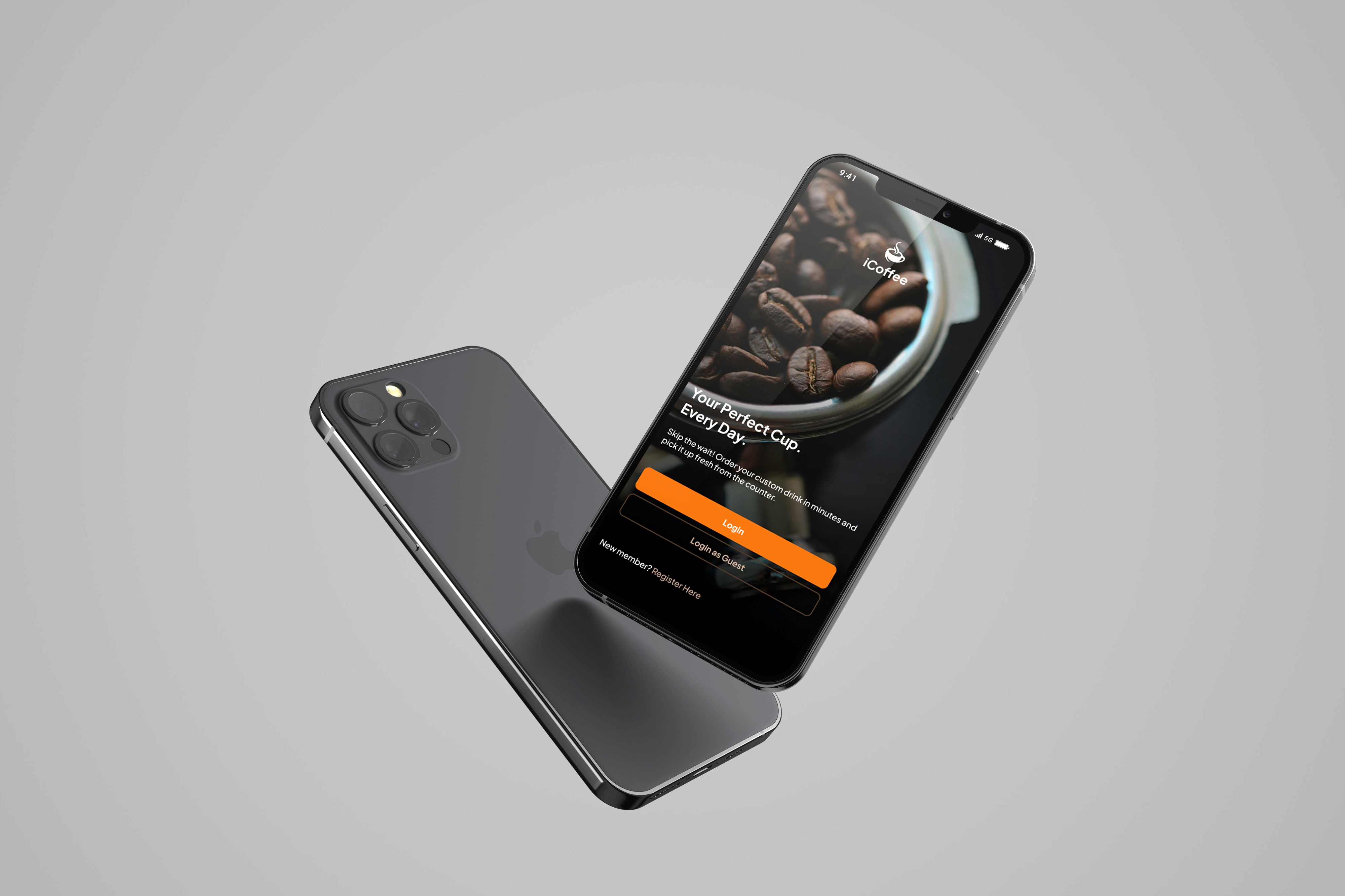
iCoffee is a productivity-focused mobile ordering platform designed to help busy professionals and teams manage urgent, complex, and high-volume coffee orders with greater speed, accuracy, and confidence. The experience combines structured ordering, branch selection, scheduled pickup, and clear confirmation to reduce friction and make time-critical coffee orders more predictable.
Understanding the Problem
Large coffee orders become surprisingly difficult when they have to be placed under professional time pressure. Users need to manage multiple items and quantities, coordinate pickup with demanding schedules, and ensure that the correct order reaches the correct branch without unnecessary waiting or uncertainty.
The challenge was therefore not simply to make coffee ordering faster, but to make high-volume ordering predictable, accurate, and easy to manage when time is limited.
Research & Discovery
To understand how time pressure affects coffee ordering, I conducted qualitative research through interviews and surveys focused on ordering behavior during busy workdays. The research explored where users experienced delays, uncertainty, and errors when placing complex orders and what they needed to feel confident that an order would be ready when expected.
Key Insights
The research revealed that large and time-sensitive orders create a combination of accuracy, scheduling, and confidence challenges. These insights became the foundation for the product's ordering flow, confirmation states, and pickup experience.
User Personas
User Problem Statements
Caitlin Chen
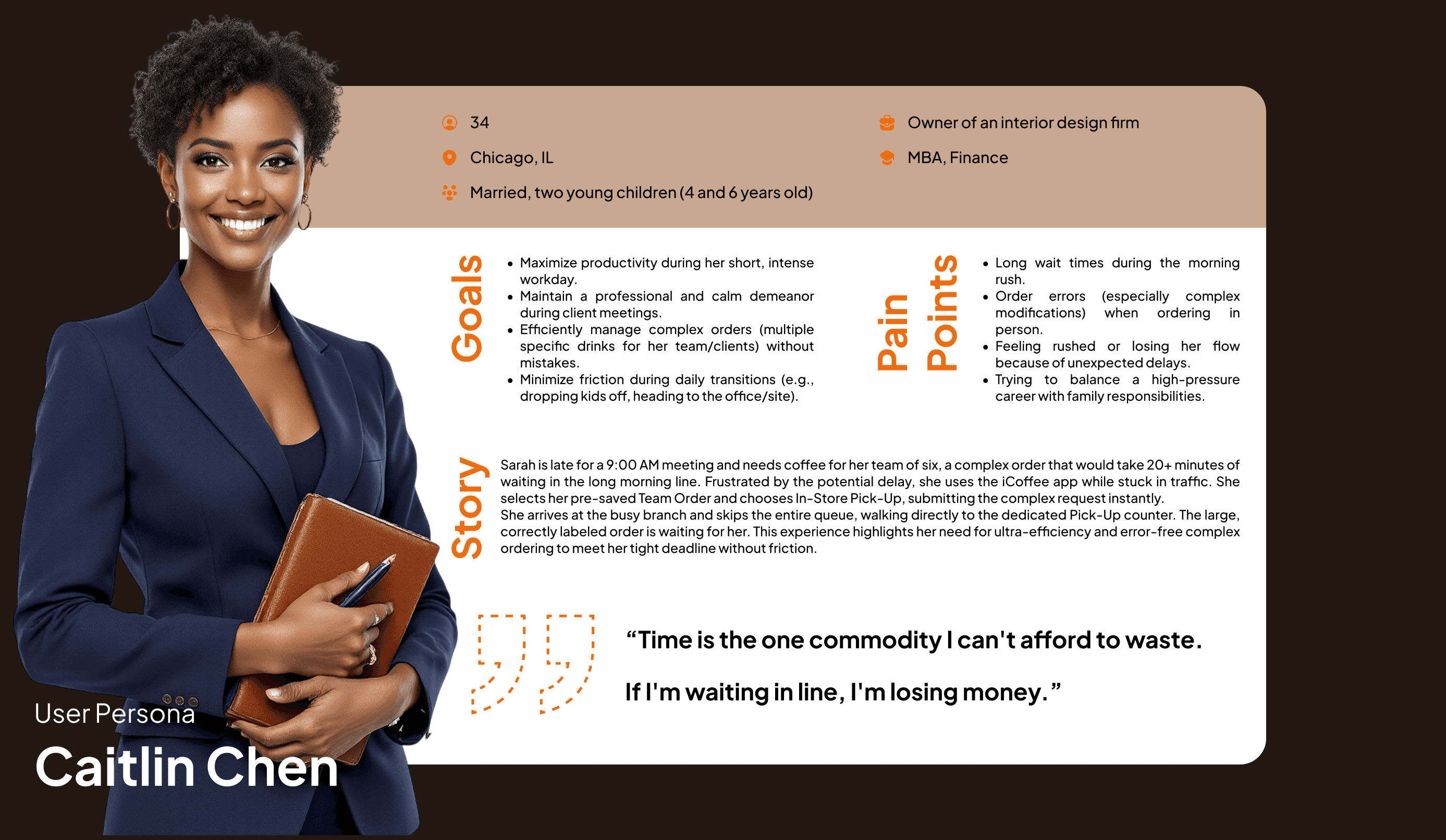
Caitlin Chen is a busy business owner with high demands on her time who needs a reliable, expedited way to retrieve complex, multi-item coffee orders because waiting in long lines or dealing with order errors directly impacts her professional efficiency and ability to meet strict morning deadlines.
Kimball Cho
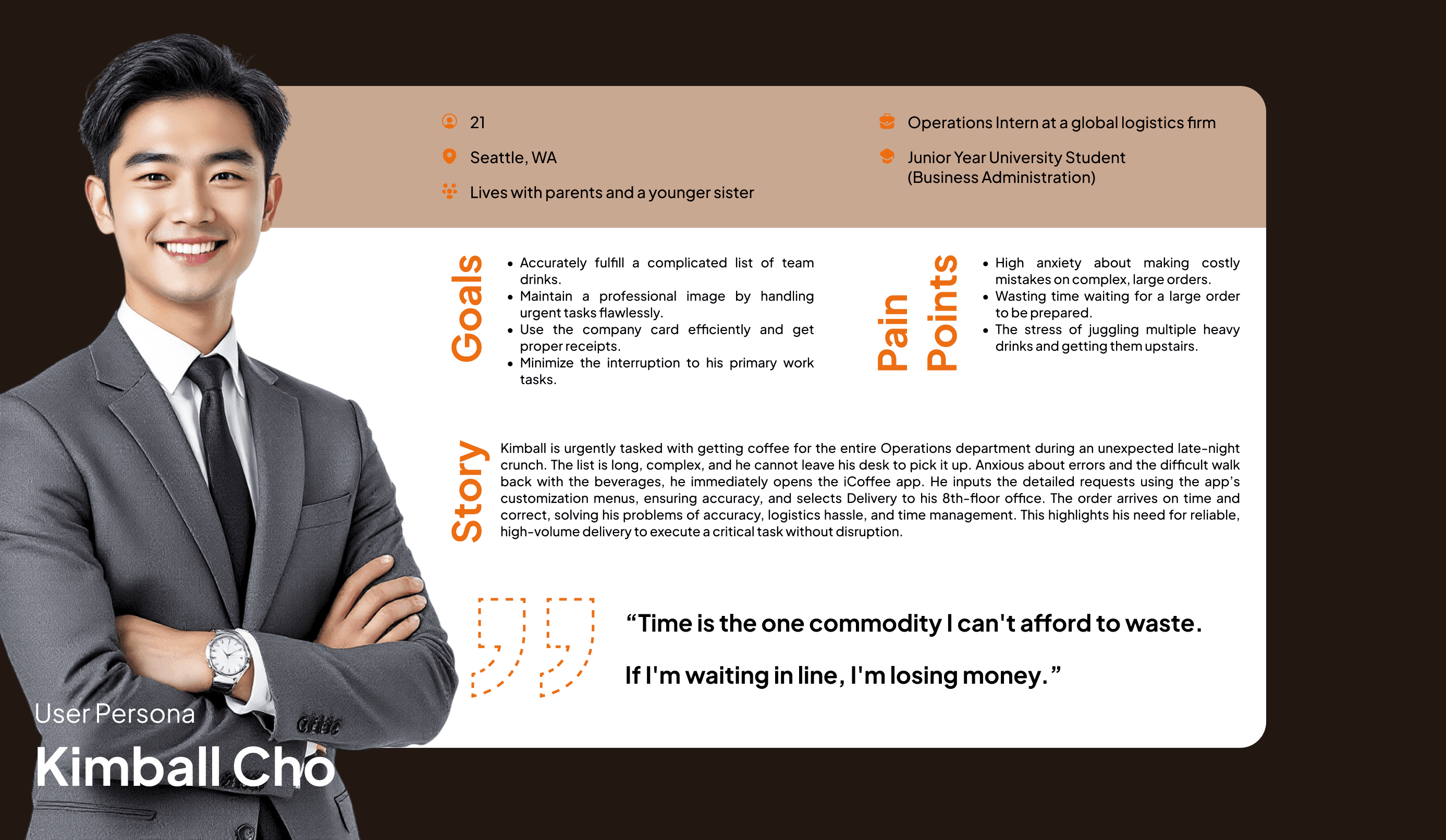
Kimball Cho is an anxious intern responsible for fulfilling large, detailed team orders who needs a streamlined, high-accuracy delivery system because failing to deliver a large, correct, and timely order compromises his professional standing and ability to complete primary work tasks.
Design Exploration
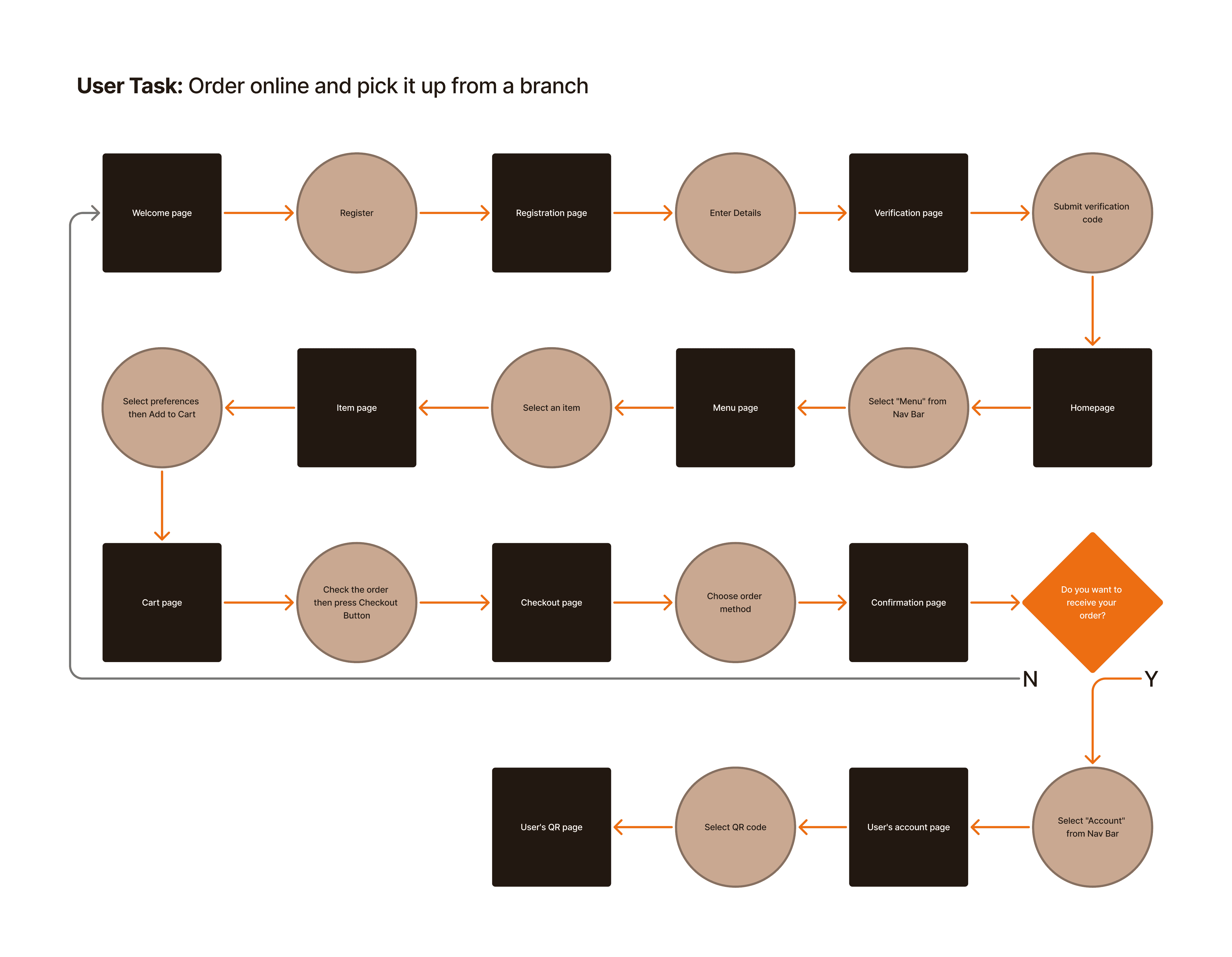
With the core ordering challenges identified, I translated the research insights into a structured experience focused on reducing uncertainty throughout the ordering journey. The exploration centered on making complex orders easier to build, review, schedule, and confirm before pickup.
User Flow
Wireframes
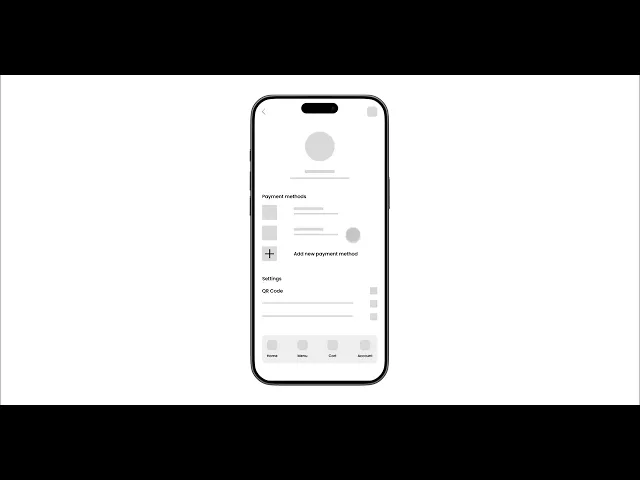
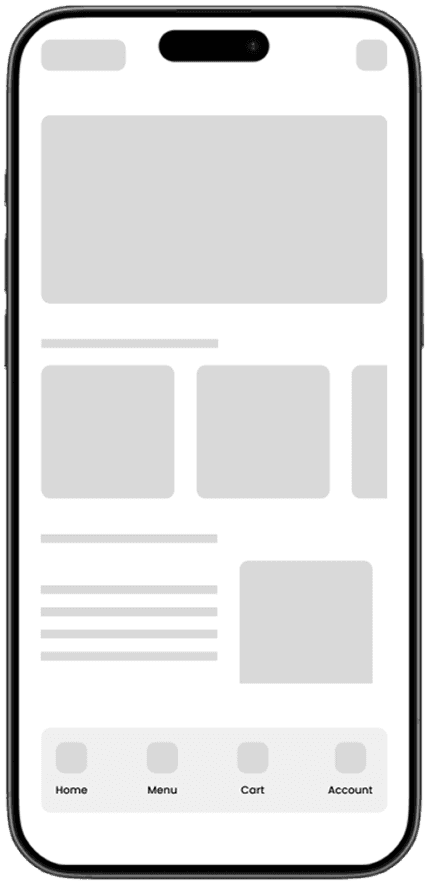
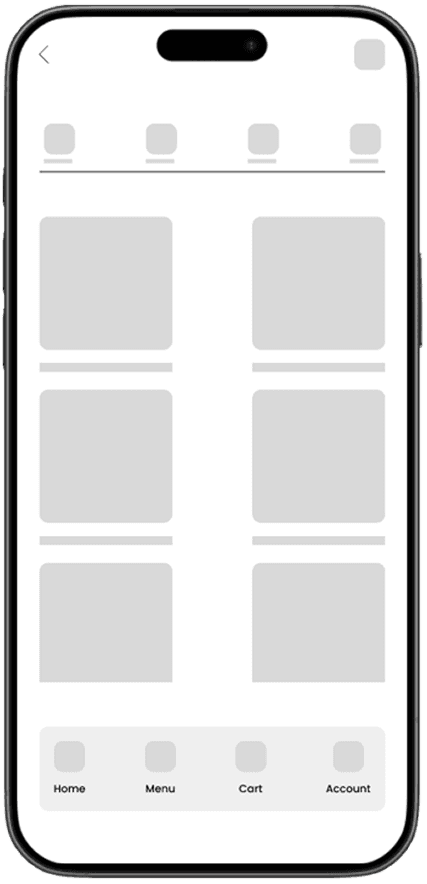
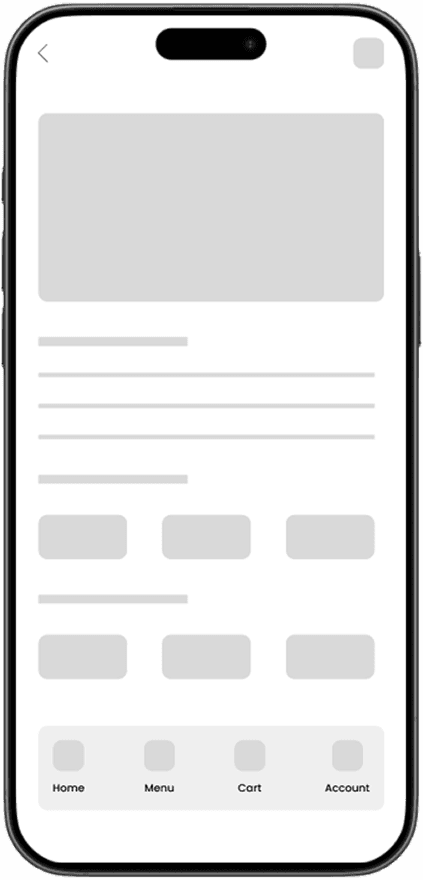
The wireframing phase translated the ordering flow into clear interface structures before visual styling was introduced. The focus was on making complex orders easy to review, keeping quantities and items understandable, and minimizing unnecessary friction between ordering steps.
The wireframes explored:
Clear item grouping and quantities
Strong confirmation and review states
Minimal friction between steps
Fast navigation for repeat actions
Low-Fidelity Prototype
Design Decisions
Structured ordering for complex purchases
Rather than treating the experience like a simple single-item coffee order, the flow was structured around multiple items, quantities, branch selection, scheduling, review, and confirmation so users could manage complex orders without losing track of important details.
Confirmation before commitment
Because order accuracy becomes increasingly important as order size increases, the experience emphasizes reviewing order details before placement. This gives users an opportunity to verify what they are ordering before committing.
Scheduled pickup as part of the ordering experience
Pickup timing was treated as a core part of the product rather than an afterthought. Allowing users to select a branch and schedule pickup supports the time-sensitive nature of the target use case.
Clarity over visual complexity
The interface prioritizes clear information, predictable interactions, and minimal distractions so users can make decisions quickly without adding unnecessary cognitive load.
Visual Design & UI System
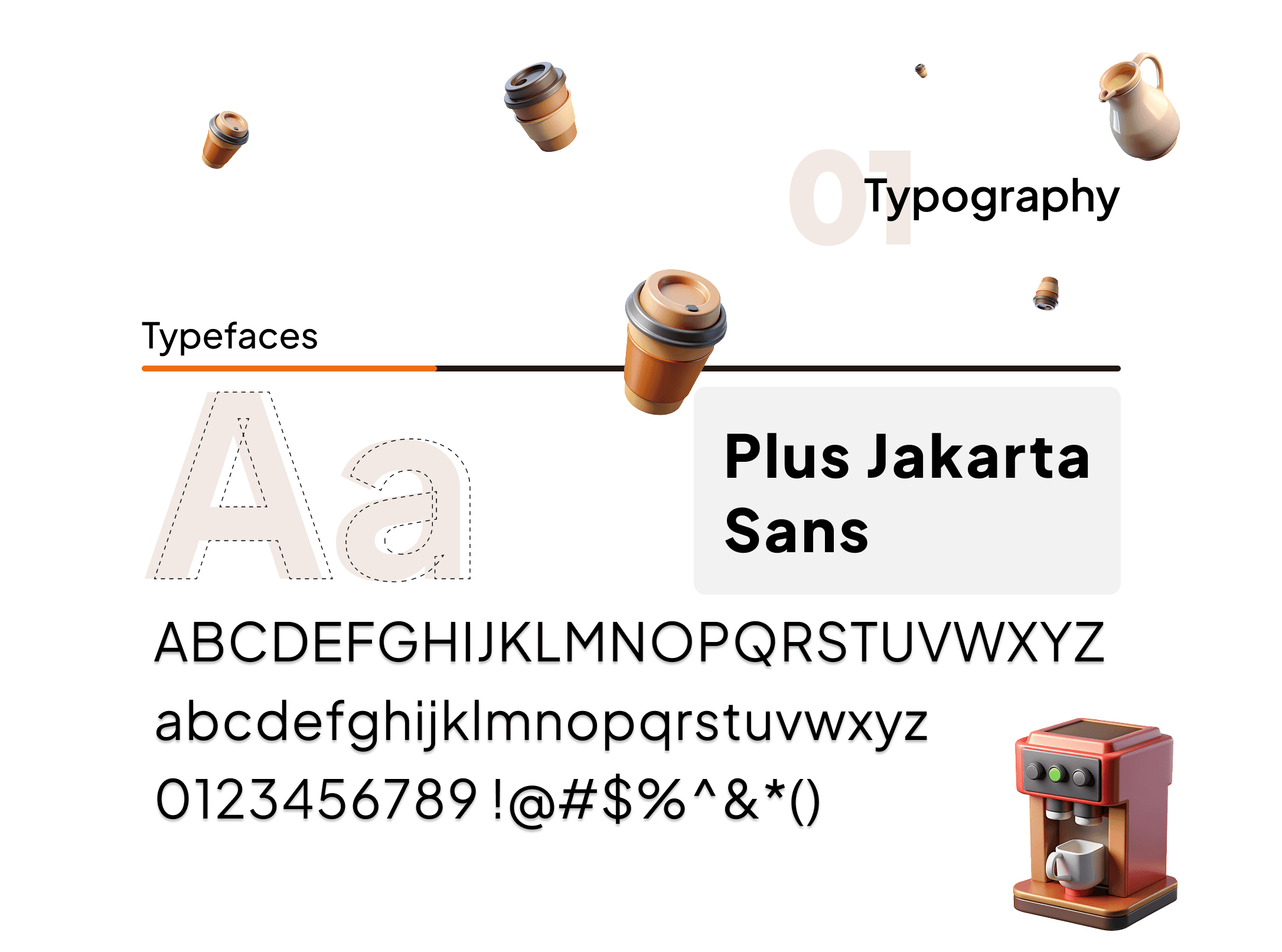
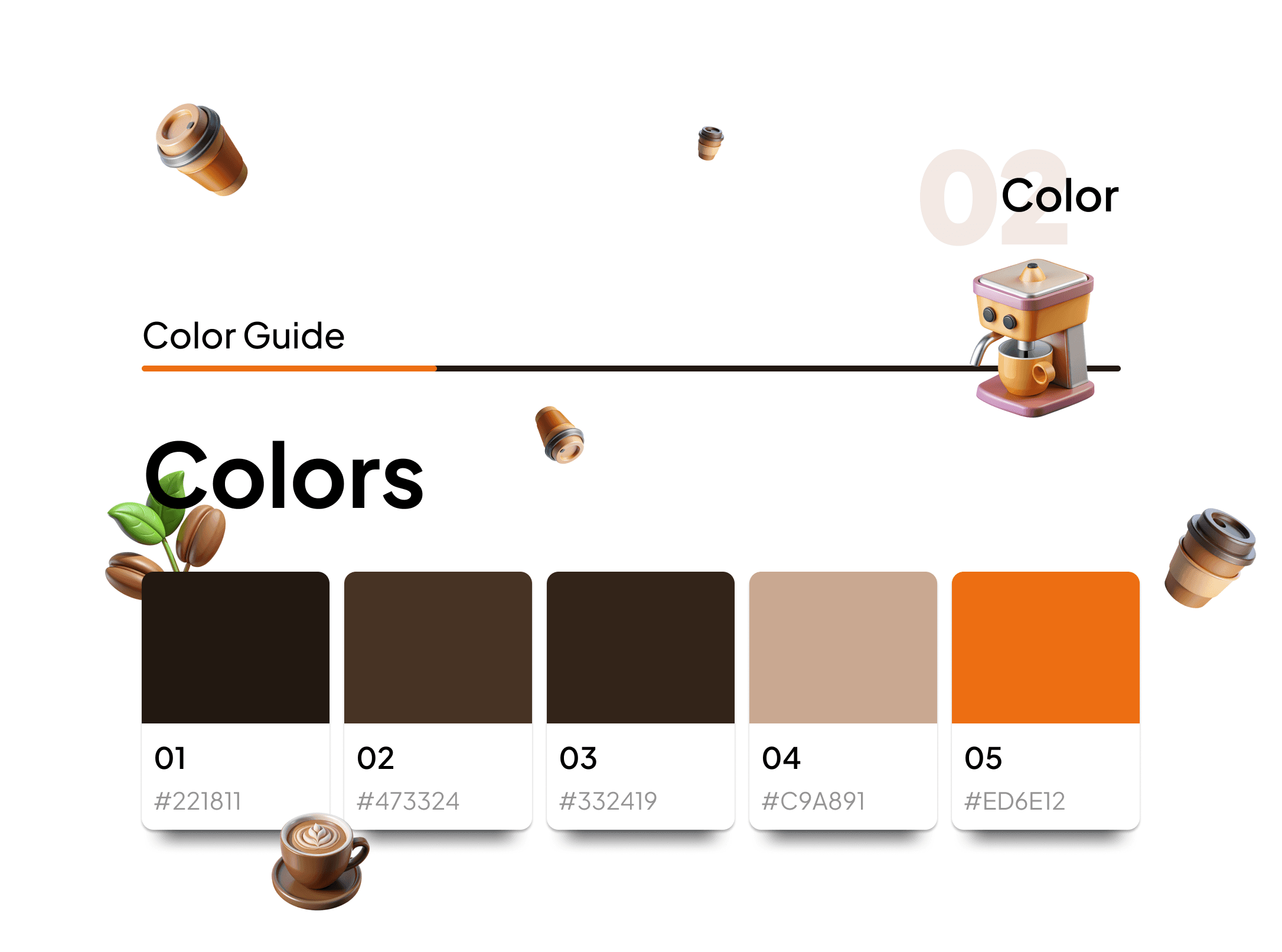
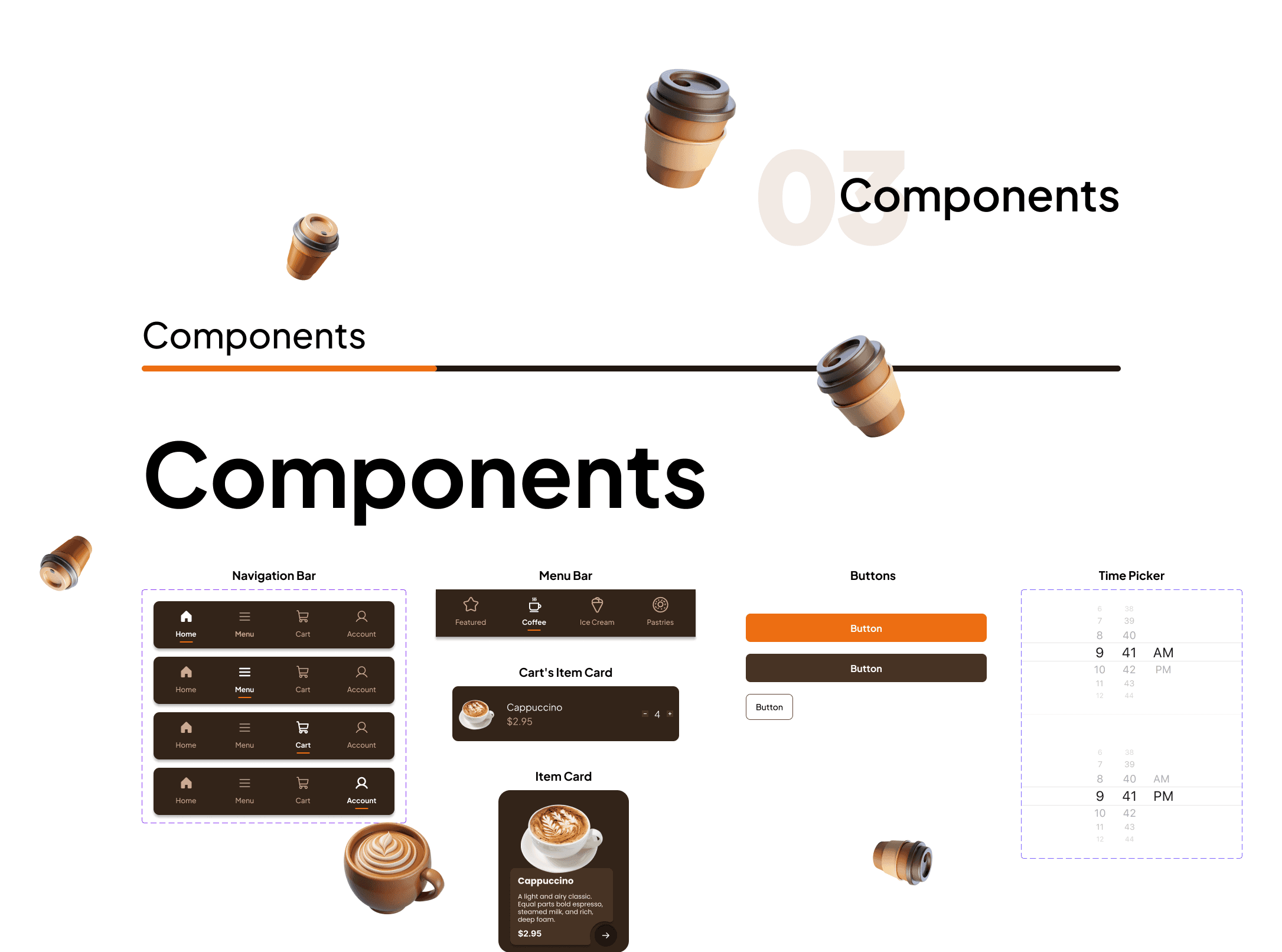
After validating the ordering structure, I developed a visual system centered on clarity, trust, and efficiency. The interface uses readable typography, a calm visual language, consistent components, and clear status indicators to help users remain confident while managing complex orders under time pressure.
Design System
Final Design Solution
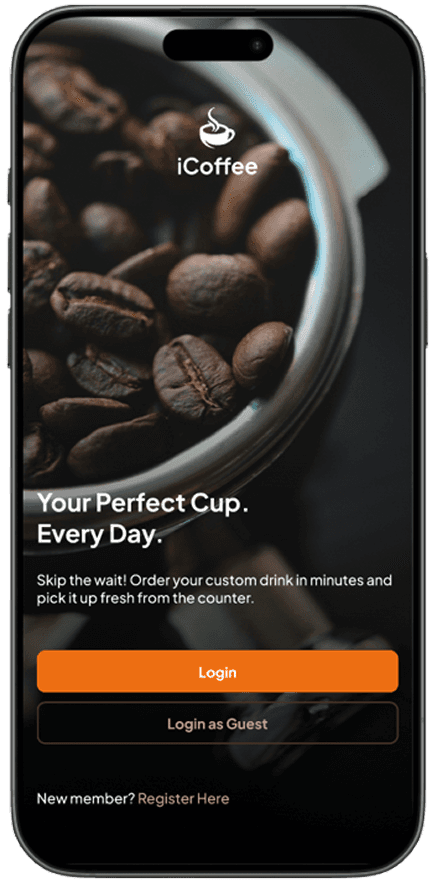
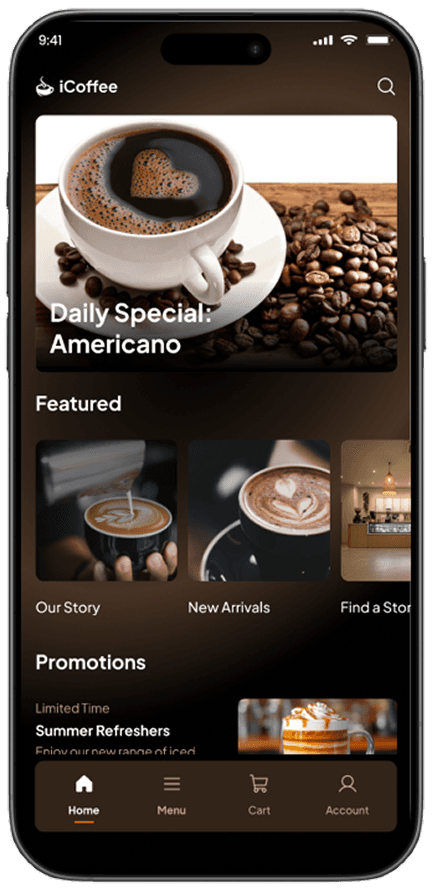
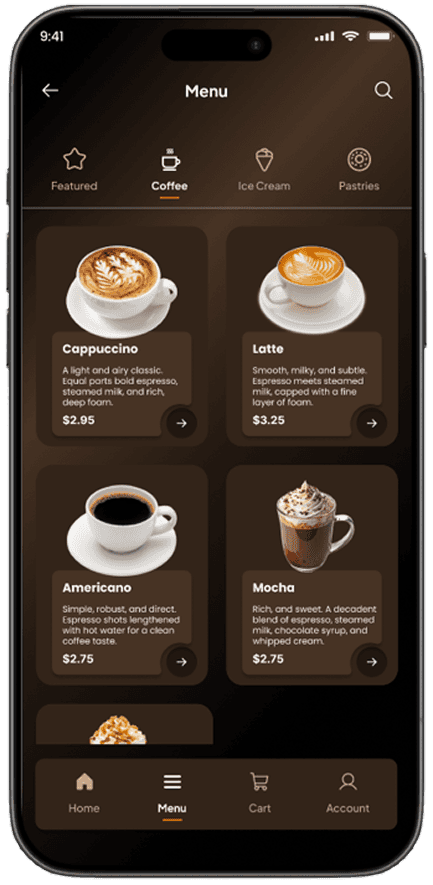
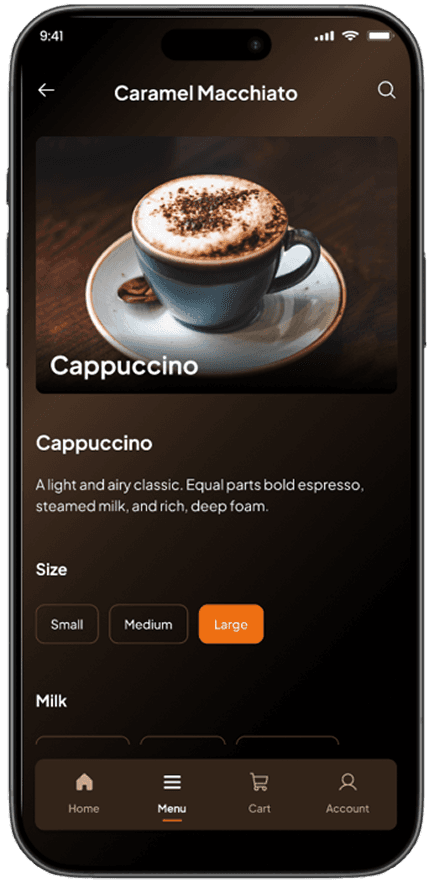
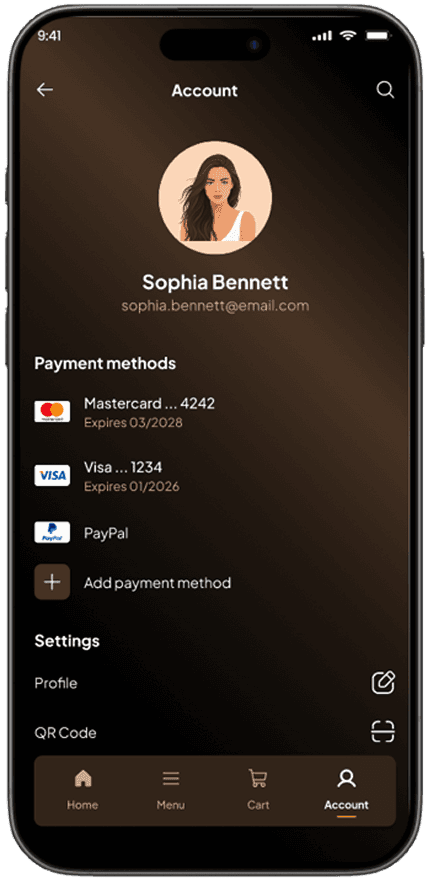
The final design delivers a streamlined mobile ordering experience built around the realities of high-volume and scheduled coffee orders. The solution prioritizes clarity throughout the journey, helping users build complex orders, verify important details, coordinate pickup, and complete the process with greater confidence.
Key Features
The solution brings the core needs identified during research into a single structured experience: complex order management, branch selection, scheduled pickup, clear review and confirmation, and a focused interface designed to support fast decision-making.
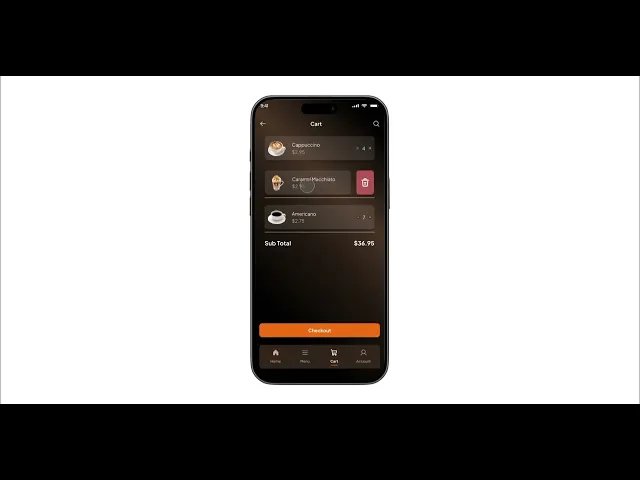
High-Fidelity Prototype
Usability Testing & Iteration
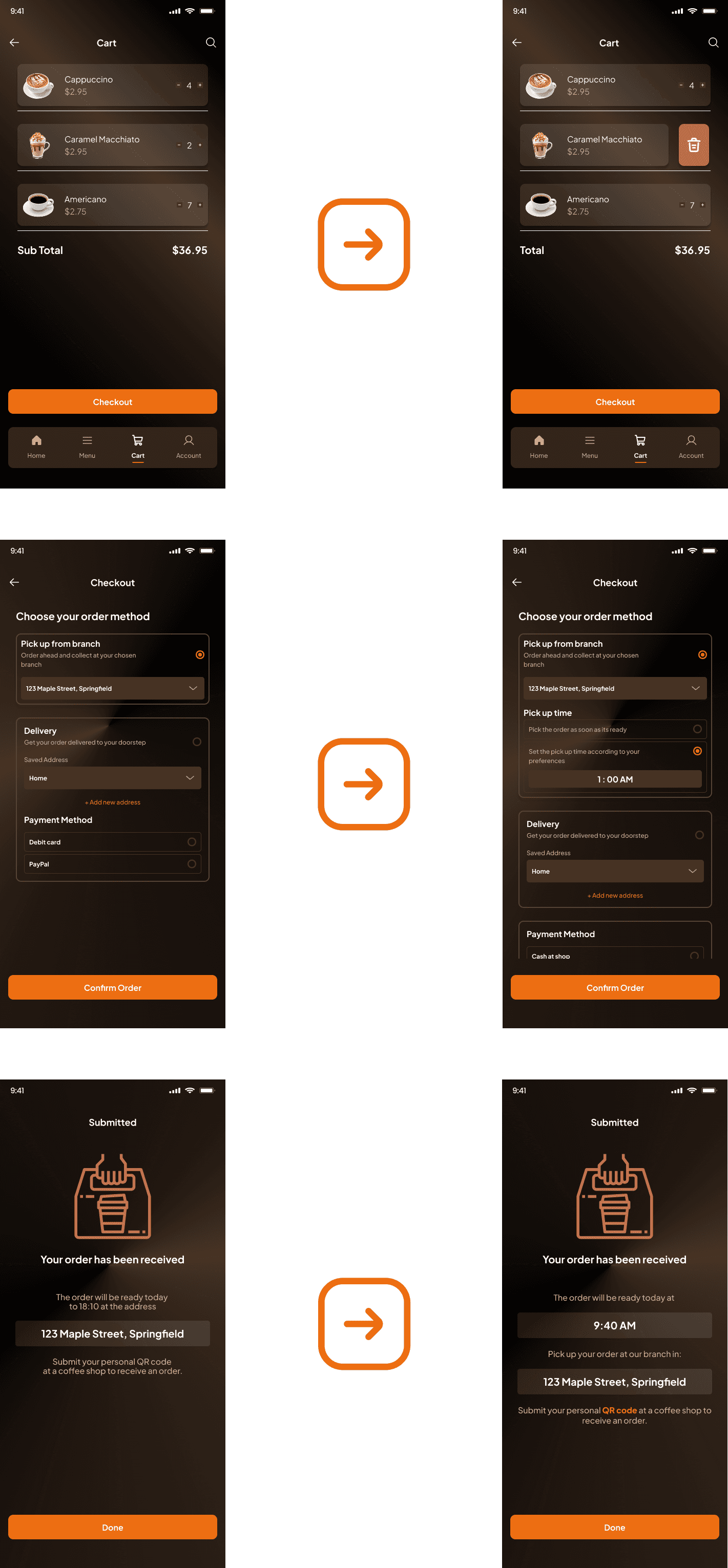
Usability testing was conducted using an interactive prototype to evaluate order clarity, scheduling confidence, and error prevention. The iteration focused on strengthening the moments where users needed reassurance most, particularly when reviewing order details, selecting pickup information, and confirming a large order.
Findings
Outcomes & Learnings
iCoffee reinforced that designing for time pressure is not simply about making an experience faster. Users also need confidence that complex orders are accurate, scheduled correctly, and ready when expected. The project strengthened my understanding of how confirmation, scheduling, and clear information hierarchy can reduce uncertainty and make operationally demanding tasks feel more manageable.
